Rankings are a living document. They are also stuck in a moment, trying to predict the future, but in practice, they breathe. The day after they’re published, there are new injuries to parse, and more information coming from each game.
When trying to make sense of data from the start of a season, the most important and predictive tools in samples this small are the simplest, in essence. Strikeout-minus-walk rate is incredibly powerful early on because it gets at the two things that pitchers have the most control over. SIERA (on FanGraphs) and DRA (on Baseball Prospectus) are more complex but still powerful because they place more weight on skills that have signal early and regress the ones that don’t. Stuff+ works because pitchers generally can repeat the shapes and velocities of their pitches much more than they can control what happens after the batter makes contact.
Given that the rankings are moving every day and these new tools are producing signals with every start, there is already a new set of working rankings linked in this Google doc for subscribers. But before they go official next week, a few fast risers need more rigorous investigation. These 10 pitchers are those starters.
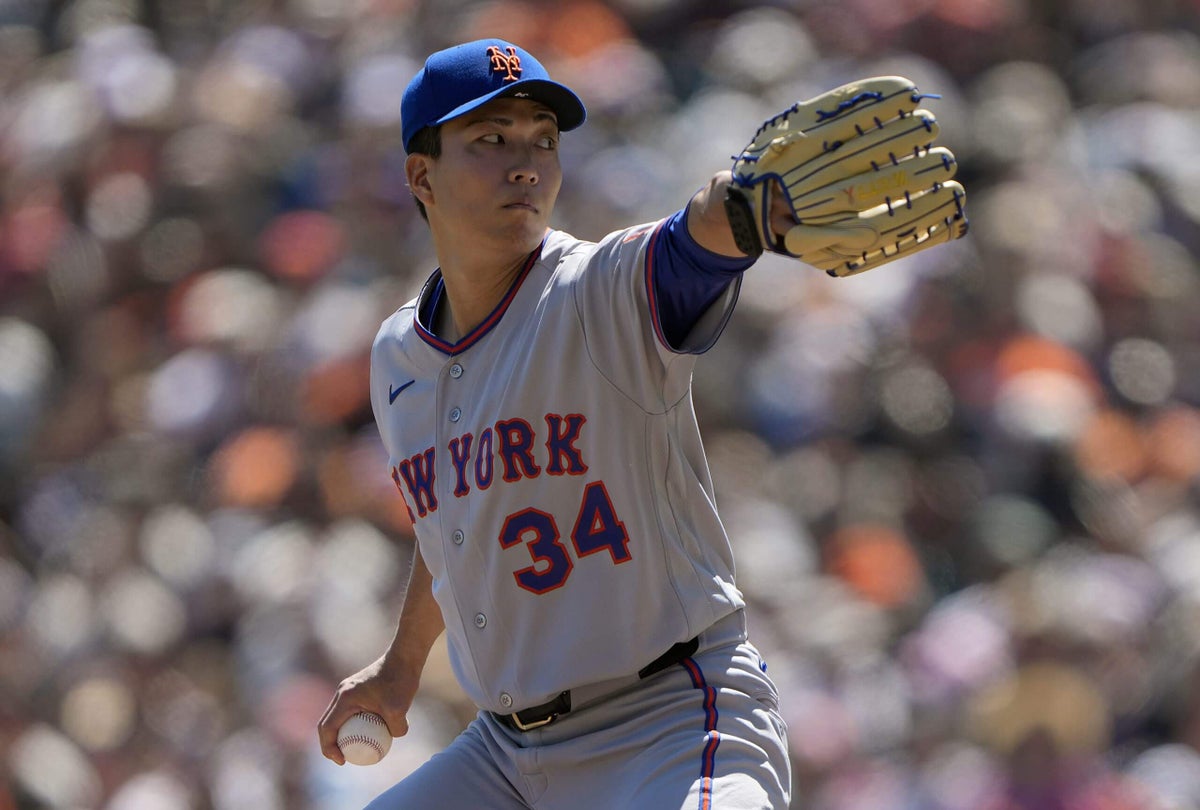
Kodai Senga, RHP, New York Mets
Changes
• Up a tick-plus of velo on the four-seamer, forkball and sinker
• Three more inches of drop, more slurve-y shape on the sweeper
• More horizontal movement on the sinker
• Increased usage of the sweeper and cutter
The Ghost Fork is still Senga’s best pitch, and command is still not the best aspect of his game, but Senga did enough work on the rest of his arsenal to think that he has legitimately put his late-season struggles last year to bed. DRA might be worried about those walks and has him near league average, and Stuff+ doesn’t actually like the changes to his sweeper, but it’s new. And having a league-average four-seamer and cutter next to a forkball that is elite against lefties and righties seems like it’s a complete arsenal to me. He also gets the benefit of a nice home park at Citi Field.
I’ll bump up the expected innings on the season because he seems healthy and he’s a lock to be in the top 50 in the rankings, if not higher.
Connelly Early, LHP, Boston Red Sox
Changes
• Added an inch of ride on the fastball
• Cut the sweeper out of the arsenal almost completely
• Two inches more drop on the changeup
Last year, Early had above-average stuff and elite command of a wide arsenal, which led to a great MLB debut that turned heads. Even before Johan Oviedo showed diminished velocity, lost his starter’s role and then landed on the injured list, Early had been passing him on the Boston depth chart, making it less likely he would lose out on innings due to a roster crunch if he were pitching well. I got that wrong before the season and will try to figure out how to best roll secondary analysis (like who has options left) into my analysis.
Either way, Early’s tweaking has mostly resulted in him being about the same as last year, and that’s good news. Let’s call the velocity drop in his second start weather-related and move him into the top 50. He’d be higher if his strikeout-minus-walk rate were even above average, but it might be after his next start against the Cardinals on Friday.
Kyle Harrison, LHP, Milwaukee Brewers
Changes
• New changeup with six inches more drop at the same velocity
• Four-seamer has two inches more ride
• Slurve has two inches more drop
The new kick-change was the focus of the hype before the season started, and it is a beauty.
But the kick-change is getting hit hard right now, so it’s only a theoretical strength for now. The spin on the pitch is pretty different from his other pitches, and the command has been inconsistent start to start — maybe hitters can spot it.
The good news is that Harrison also improved his fastball and slurve a little, pushing them to the best they’ve ever been by Stuff+, and so SIERA, K-BB, and DRA all think he’s a well-above-average pitcher. He’s always had a good fastball, so lining up around the back end of the top 50 seems like a decent place to communicate that he does appear to be a new pitcher, but that there’s still a little risk in the quality of his slurve and his previous levels of command.
José Soriano, RHP, Los Angeles Angels
In his last start, Soriano flashed all of the improvements to his arsenal that should contribute to a career year:
• His sinker showed an inch more drop and three inches more sideways movement
• He used his four-seamer almost double the amount he did last year, and it had a little more ride
• His curveball was a tick harder
• His splitter had an inch more drop
• He used both his splitter and slider more often
Under the tutelage of Mike Maddux, Soriano’s biggest alteration is the added four-seamer usage, which has made him more of a four-pitch pitcher against batters on both sides of the plate, has also given him an extra 11 inches more ride versus his sinker, and is his only pitch that is effective in the top of the zone. That’s spread out the area that batters have to cover, and resulted in an uptick in swinging-strike rate, which has more signal in it even than strikeout rate this early in the season.
Right now, all of Soriano’s indicators are pointing in the right direction, and he’s always been a Stuff+ darling. Why isn’t he ranked higher than the top 60? Well, he doesn’t have a long history of striking guys out, ground-ball pitchers usually have worse WHIP numbers than their strikeout-heavy counterparts, and the Angels once again have a bottom-five defense, which looks like it might be meaningful despite the sample size. Soriano might have an ERA in the mid-threes but also a WHIP over 1.30, which will sap some value.
Taj Bradley, RHP, Minnesota Twins
Changes
• Added a little velo and an inch of ride to the four-seamer (plus some cut)
• Added some drop to the splitter and used it more
• Added some drop to the cutter, making it sort of a gyro slider
• Added drop and sweep to the curveball
All these changes have increased how Bradley’s stuff ranks over every pitcher but Jake Irvin year-over-year, so they are significant alterations, even if they seem modest at first. The split-finger adjustment has really shored up the pitch, tightening the movement patterns and improving his command of it.
But despite this improvement and a mid-threes ERA projection with a 25 percent expected strikeout rate, I’m not sure about moving him into the top 50. He still has below-average command on the fastball and cutter, and that has kept him from making the most of his standout stuff in the past. There’s still some risk here.
Joey Cantillo, LHP, Cleveland Guardians
Changes
• Added 11 inches of drop to the slider
• Added two ticks to the changeup
• Added two ticks to the curveball
Call it tunneling, or call it pairing, but this arsenal from Cantillo has more competitive two-pitch combos than last year’s. By throwing the changeup harder, and getting less movement on it, the pitch looks more like the fastball in terms of movement and spin. A true straight change, it now benefits mostly from the 10 mph velocity gap between it and the fastball.
By adding a ton of drop to his slider, he created a new pairing — the slider and curveball. The two pitches look somewhat alike in terms of spin and movement, but the slider is four ticks harder and has 11 inches less drop. So now Cantillo can throw the curve when they’re expecting the slider and vice versa. Check out how the spin direction on his fastball, changeup, slider and curveball now overlap this year compared to last year in this visual from Baseball Savant.

This type of pairing between secondaries is notoriously hard for pitching models to capture, so for Cantillo to sit 92 on the fastball and benefit from tunneling secondaries and also have an above-average Stuff+ for a starter is really good news. Other lefties like Trevor Rogers and Kris Bubic seem to be beating the models in similar ways.
Unfortunately, those other two examples have better command than Cantillo. His SIERA, DRA, Stuff+ and K-BB all suggest he’s better than average and should manage an ERA under four, but how much he beats that number by will have to do with how much he can limit the walks and limit the middle-middle that has sometimes led to home run issues in the past. In fantasy leagues where this is possible, he might be a good guy to hold while it’s cold in Cleveland and trade before the fly balls get a temperature boost and turn into homers. Low velocity, low command is an uneasy pairing.
Shane McClanahan, LHP, Tampa Bay Rays
Changes
• Four-seamer down two ticks and missing an inch-plus of ride
• Slider lost two ticks of velocity
• Changeup retained velocity and added five inches of drop
It’s not all good news for McClanahan, who lost 20 points of Stuff+ on the fastball due to all the injuries he’s dealt with. There are some positives, though. The slider is still good and the changeup looks like it’s even improved. It now has the profile of a kick-change. Both pitches are getting great results. Even his fastball is getting good results, when isolated.
The problem has been the command, which has turfed his K-BB, SIERA and DRA. I still see some hope in the secondaries and am going to keep him in the top 60 even though he hasn’t finished five innings in a start yet. There’s enough upside and demonstrated swing-and-miss to keep him clear of some of the more schedule-dependent pitchers who are ranked lower.
Janson Junk, RHP, Miami Marlins
Changes
• Four-seamer up a tick in velocity and an extra inch of ride
• Added four inches of drop and two inches of horizontal to his changeup
• Added two inches of drop to his slider
• Added five inches of drop and an inch and a half of horizontal to his sweeper
• Added an inch of drop to the curveball
This was a complete revamp for Junk, which resulted in an extra 10 points of Stuff+. That may not be too surprising because he went to Driveline Baseball for his offseason work and they have a proprietary version of Stuff+ that bears a strong resemblance to the one at FanGraphs. All that work has given him three pitches in the sweeper, slider and changeup that work on an entirely different plane than his arm angle, as you can see from the Baseball Savant image below.

The result on the field hasn’t been a big uptick in strikeout rate, but with his elite command, he keeps the walk rate down and is poised to make the most of this uptick in stuff. SIERA preaches restraint, with a league-average number, but DRA says he’s 17 percent better than league average. We’ll split the middle — especially since he has such a nice home park — and make him a top-75 starter, limited mostly by his lower strikeout rate more than anything else.
Foster Griffin, LHP, Washington Nationals
Changes
• Added a sweeper with plus sweep
• Added a splitter with plus drop
• Added a sinker with above-average horizontal break
• Added two inches of horizontal break to his curveball
Griffin went to Japan and came back with one of the widest arsenals in the sport. Despite only averaging 92 mph on the fastball at a time when even the average lefty starter has two more ticks, he rates as having above-average stuff because his cutter has plus sideways movement and keeps righties off the plate. The splitter and sweeper he came back with are good out-pitches now, but the changeup gets the best results (making him yet another double off-speed guy).
He’s always had a reputation for good command, from scouting grades to walk rates in the minors, and his SIERA and DRA say he’s comfortably better than average. He may beat his 4.30-ish ERA projections going forward, and his schedule looks doable for the foreseeable future. He will crack the top 100 for fantasy and is a modest positive score for the new front office in Washington.
Jack Kochanowicz, RHP, Los Angeles Angels
Changes
• Upped his arm angle seven degrees
• Added a half-tick of velocity to every pitch, save the slider
• Added two inches of drop and an inch of horizontal to the changeup
• Added five inches of drop to the slider, making it more of a death ball or power curve
• Upped the usage of the four-seamer and changeup
Once all about his super sinker, Kochanowicz underwent a ton of change in the offseason to broaden his arsenal to improve his splits against lefties and add some strikeouts. So far, so good, with even splits and the best strikeout rate he’s shown at any level.
Unfortunately, it’s still a mixed bag. His strikeout-minus-walk rate is half the average rate, his SIERA is near five and even his improved Stuff+ is only average for a starting pitcher. DRA likes what he’s doing, though, saying he’s 10 percent better than league average, and average would be an accomplishment after he was the worst starter in the league by at least one statistic last year. He’ll graduate to a level with other deep starters and streamers in fantasy, and can at least be a back-end starter for the Angels going forward.

Source link