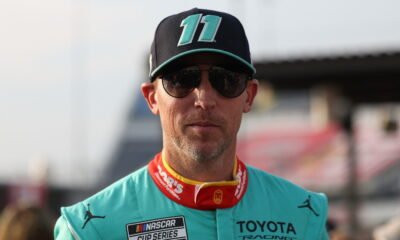
Each week, The Athletic asks the same 12 questions to a different race car driver. Up next: Spire Motorsports driver Michael McDowell, a veteran who is currently 47 points out of a Chase for the Cup spot with six races to go in NASCAR’s regular season. This interview has been edited for clarity, but the full version is available on the 12 Questions Podcast.
1. Do you typically arrive for things early, late or on time and why?
I am annoyingly early. My wife gets so mad at me. I just have a little bit of anxiety about people waiting on me. I don’t want anybody to have to wait on me, and I feel like it’s important for me to be early and prepared.
Even going to the airport (for a charter flight to the race). Our flight boarded at 10:30 and didn’t leave until 11. When my wife hears that, she’s like, “Oh, we don’t have to be there until 11.” I’m like, “No, we’re boarding at 10:30, so we’ve got to be there at least by 10:15.”
Then we’re sitting in the lobby at 10:50 and she’s like, “Yeah, I’m so glad we got here at 10:15.” (Laughs.)
2. What is the pettiest thing that annoys you during a race weekend?
I don’t know why it drives me so nuts, but it’s when the caution flies and you were clearly ahead of somebody, and then they pull up next to you (to signal to NASCAR the position is being contested and needs to be reviewed) and you’re like, “Come on, you weren’t even close.”
I realize this is kind of what you have to do to get NASCAR’s attention, but then they’ll ride next to you for the next five laps fighting for the spot. You’re just like, “Alright, they’re going to call out the order here in a minute, and you’re going to see that you’re wrong. So I don’t understand why you’re getting so aggravated and riding around side by side.” But that’s what they do. (Laughs.)
3. What is something you’ve learned to stop explaining to people?
I always give an answer to everything. I don’t feel like there’s anything that annoys me so much that I won’t answer somebody, except maybe my kids.
Kids will just keep wearing you out. Then I always think about my parents saying, “Because I said so.” You finally get to the point where you’re like, “OK, that’s it. I’m done talking about it. Because I said so.”

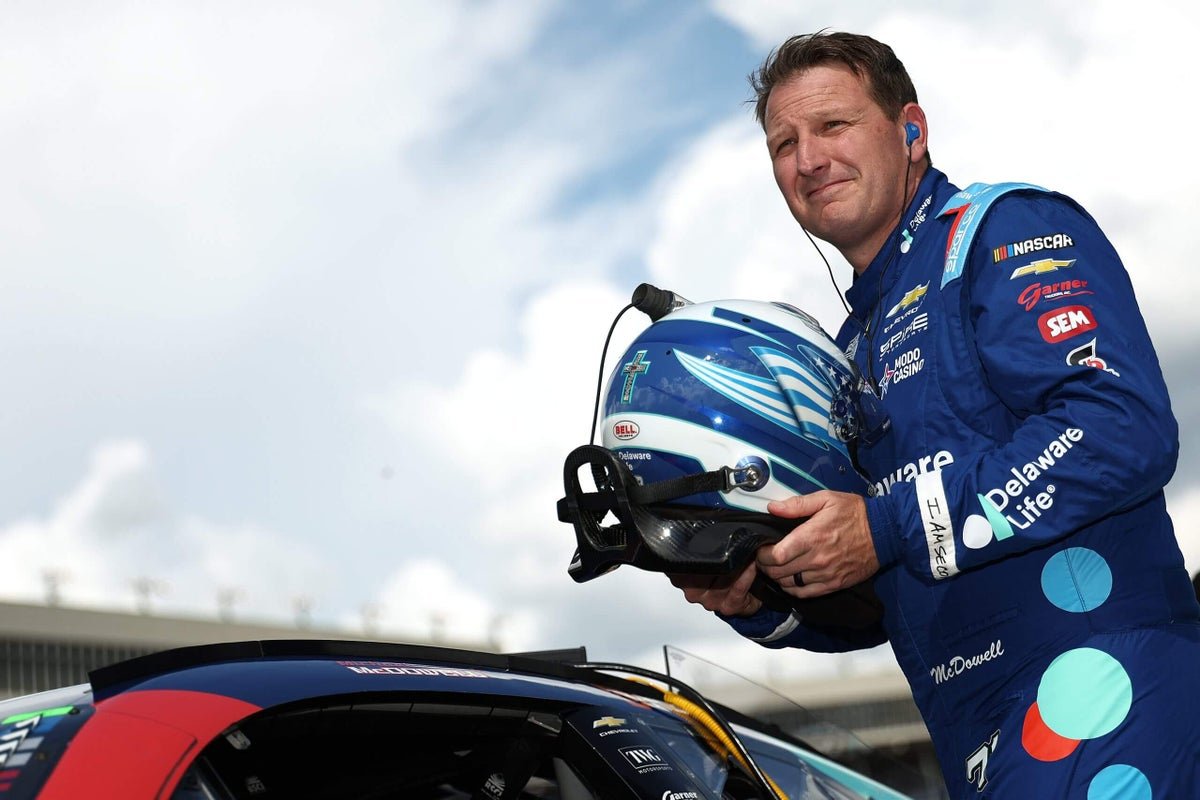
“I always give an answer to everything,” Michael McDowell says. “I don’t feel like there’s anything that annoys me so much that I won’t answer somebody.” (Brett Farmer / Getty Images)
4. If you could go back to the early days before you reached NASCAR, what is one different decision you wish you had made?
Having somebody just chasing deals. That’s definitely something I tell people now when they ask, “What do I have to do to get there?” I tell them, “Go find sponsorship and find somebody to help you do it. Build your brand early.”
I was so focused on driving and thought that would be enough. But you get to a certain point where everybody’s so good that you have to differentiate yourself. Whether that’s branding or sponsorship, that’s a huge part of what we do.
5. What is it like to be in a debrief after a bad race?
Unless you won, they’re all bad races. You’re picking apart what you could’ve done better, how you could’ve executed this or that, where you missed it on setup, where X, Y, Z cars were better than you.
The hardest ones for me to let go aren’t really the debrief itself, it’s when I personally make a mistake that takes away a good day. Whether it’s speeding on pit road or a bad restart or whatever it is, it’s so hard to let yourself off the hook.
I find it really easy to let my team or the pit crew off the hook because mistakes happen. But for me, I probably hold myself to a higher standard than I need to.
6. I’m asking each driver a pair of wild card questions, one about the past and one about the present. You spent parts of five years start-and-parking. During those years, what was your mentality about the future? Did you believe it would eventually lead somewhere such as the point you’re at now, or were you just trying to pay the bills?
It was more that I needed to stay in the Cup Series, even if it was at a level I wasn’t loving. It was providing for my family, but the motivation wasn’t really about that. It was more that I wanted to see it through. I wanted to see if I could eventually get where I hoped I could get.
I never really lost hope that one day I’d get an opportunity. There were definitely times where it looked less and less promising. But then something would always pop up.
Maybe it was one or two Cup races. Maybe an (O’Reilly) race. It would build a little momentum. I always felt like I was slowly progressing forward. I knew if I left, or if I went and did something else, I wasn’t getting back in.

“I never really lost hope that one day I’d get an opportunity,” Michael McDowell says of his persistence in NASCAR. “… Something would always pop up.” (David Jensen / Getty Images)
7. In terms of the present, you’re a guy who will crawl under the cars in the race shop to see what’s going on and have been very influential within the team throughout your career. But you’ve talked about having to trust more people now instead of trying to be hands-on with everything. What has that transition been like?
I haven’t let go all the way, I’ve just removed myself from areas where I’m not helping. That allows me to focus on the things that are beneficial. You never really lose your understanding of vehicle dynamics, how the cars make speed, and what we need to do to extract more from them.
But I’m not questioning as much anymore. I’m not asking, “What are we doing this week with this, this and this?” I know everybody’s pushing really hard. We have really capable people at Spire doing those jobs. I don’t feel like I have to be involved in every detail or lead the charge anymore.
And honestly, you don’t want me leading the charge because I’m not the smartest person to do it. I’ve always had that no-quit attitude that’s helped keep me going. Sometimes it’s hard to redirect that energy into the right areas. (Spire competition director) Matt McCall has helped me a lot with that because he’s that guy. He’s got that level of intensity, he’s pushing Spire Motorsports forward, details don’t really slip by him.
8. If you could get any driver’s helmet in the history of motorsports, whose would it be?
Probably a Michael Schumacher helmet. Growing up as a kid, that was my guy.
9. When things are not going well, do you prefer people leave you alone or check in on you?
I don’t really need anybody to check in on me, but I also don’t let things just be. If things aren’t going well or haven’t gone well, I’m usually the first one to admit it and say, “Here’s where we’re at. This is what we’ve got to do. This is what I need to do. I know I missed it in this area.” So I don’t stay quiet about it.
Emotionally, though, I don’t really need somebody checking on me. I feel like this sport has taught me to be pretty resilient. You move on pretty quickly.
10. What is something about yourself that would surprise people who think they “know” you?
One of the producers from Amazon was watching that video I did with Cleetus (McFarland, where McDowell and several other drivers went drifting). He said, “Man, I saw a spark and a swagger in you that I hadn’t seen before.”
I said, “Yeah, it’s because usually after a race, when you’ve got a microphone and camera (in a driver’s face), you don’t really get the same opportunity to just be yourself and be relaxed.”
I’m definitely misunderstood. It’s hard to show that personality in 30-second interview clips. I’m not outwardly self-promoting or doing a lot on social media. I don’t think everybody gets the opportunity to see that side of me. And honestly, I don’t mind that.
11. What is something you laugh about now that was absolutely not funny at the time?
I try not to take myself too seriously, because nobody else is going to take you as seriously as you are.
I’ve had plenty of embarrassing moments that I wish didn’t happen, like running into the safety truck at Richmond. I was in the No. 95. We were pulling onto pit road.
Danica (Patrick) was right in front of me and she missed the safety truck at the last minute. I was looking down at my dash and there were lead-lap cars pulling up to pit on my inside.
And I just nailed the safety truck. It was the most embarrassing moment ever. It was genuinely a mistake; it’s not like I was eating a sandwich or not paying attention. There was just so much happening, and I look up and — bam! — it’s right there. Things happen fast, even under caution.
But it looked ridiculous. NASCAR called me to the hauler afterward; I think they wanted to drug test me just to make sure I was all there. Mike Helton was just like, “What in the hell were you doing?” …
At the time, I definitely wasn’t laughing. And I probably still wouldn’t laugh today. But maybe 10 years, I’ll laugh at it.
12. Each week, I ask a driver to give me a question for the next interview. Last week was Austin Hill and he has three kids and wants to know how you do it with your five kids and how do you juggle what you juggle?
My wife (Jami) is great. That’s the biggest thing. We’ve been together since we were 15 years old. She’s been on this journey with me and she knows how hard it is, the time commitment, everything it takes.
There have been different seasons, too. When I was start-and-parking, I didn’t have to do a whole lot. I was home a lot more and have a lot more family time. As things ramped up, I went back to hustling like when I first got to Cup. Doing every appearance, every sponsor obligation. Honestly, my wife is just incredible at managing it all.
I’ve also worked really hard on efficiency. When I’m at the shop, I try to make the most of my shop time. When I’m at home, I try to make the most of my home time. I try not to let too much overlap happen.
You hear people talk about quality versus quantity with kids, that you’d rather have one hour of meaningful quality time than eight hours. But that’s not how kids work. Quantity is quality. When you’re there for five or six hours, cool moments happen during those five or six hours. Being present is really important.
When I go home, I have this thing. Nick Terry (a pastor from Motor Racing Outreach) taught me this. When I walk into the house, I imagine I’m hanging my hard card up (the NASCAR season credential most people in the garage wear around their necks). That part’s over. Now it’s time to switch gears. Now I’ve got to be home and be present. The mental shift for me is “Now you’re home, so be home.”
The next interview I’m doing is with Brad Keselowski. Do you have a question I can ask him?
If he could only do one thing right now — own the team or drive — which one is he picking? He can’t do both. Not 10 years from now and not 10 years ago, but today: Brad, you only get one opportunity. What are you going to do?

Source link