North Carolina lawmakers, who are in the home stretch of state budget negotiations, are discussing whether to reserve hundreds of millions of dollars for a stadium project — a move that, if approved, would juice an ambitious attempt to bring a Major League Baseball franchise to the Triangle region, people familiar with the deliberations tell WRAL News.
Lawmakers are discussing a possible budget provision that would earmark the money for economic development purposes, the people said. The funds could be reserved for the development of anything from stadium infrastructure to an entire stadium complex in or near Wake County, provided the area lands a franchise, they said. A proposal to increase county occupancy taxes — a hike that could further support the project — is also being discussed, they said.
The people spoke on the condition of anonymity because they weren’t authorized to publicly discuss the negotiations. Negotiations are ongoing and the effort could change or dissolve as talks evolve, they said.
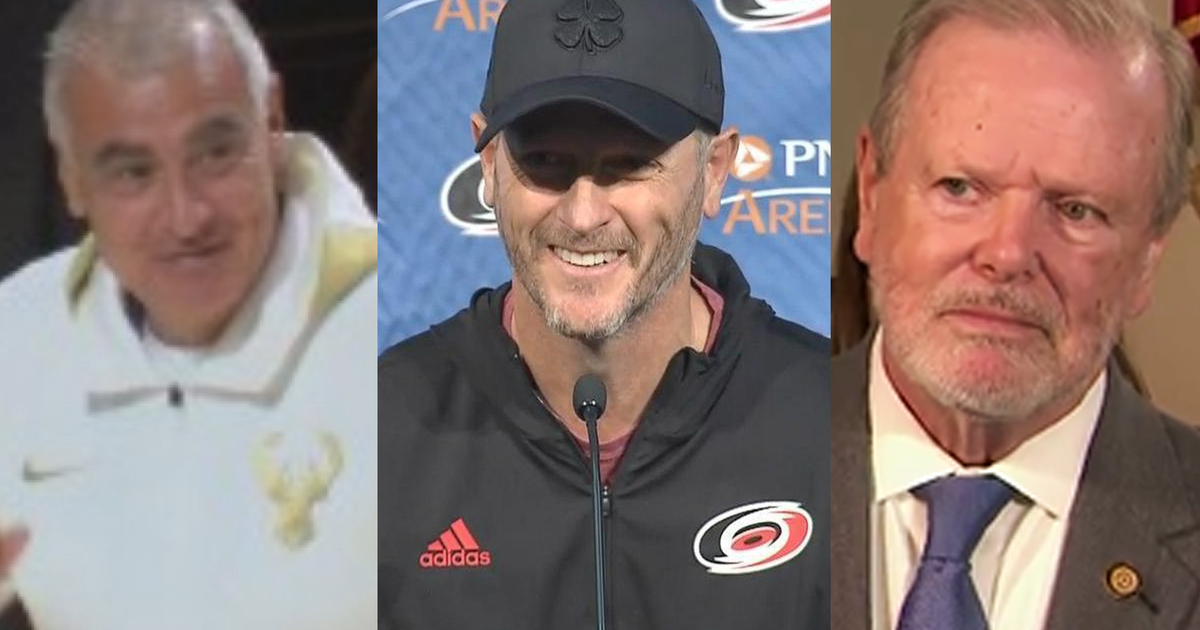
Major League Baseball Commissioner Rob Manfred has said he wants to select two new cities for expansion before early 2029. It would be the league’s first expansion since 1998. Multiple billionaires — Carolina Hurricanes owner Tom Dundon and private equity manager Marc Lasry — have separately said they want to bring a big-league team to Raleigh. And multiple state officials this week have hinted at the possibility of state support for such a bid, pointing to the Triangle as the most likely region to get that backing.
The cost of acquiring a franchise and building a stadium is projected to be at least $4 billion.
Senate leader Phil Berger, in his last months in office, acknowledged this week that there have been talks about possible funding in the forthcoming budget to support a baseball team in Raleigh. “There’s no agreement on anything having to do with that at this point,” he told reporters on Tuesday. “Obviously, there’s a lot of talk about it, but nothing has been agreed to.”
Asked about it again on Thursday, Berger confirmed that there could be money in the budget for baseball. He said Triangle market would be a good candidate, citing the popular response to the Hurricanes’ Stanley Cup run and projections that show North Carolina soon will be the nation’s seventh-most populous state.
“If there’s an opportunity for North Carolina to get an expansion baseball team, I’d love to see it,” he told reporters. “I am hopeful that we’ll have an ability to put forward something sooner rather than later that will give us that opportunity.”
He added: “I’d be interested in seeing what steps we would need to take in order to facilitate putting North Carolina in the best position to be successful in having an owner’s group because obviously we need that to be awarded a franchise.”
Berger has been driving the push for the budget provision, people familiar with the negotiations said. It’s unclear if the House leadership would go along with the plan as the chambers hash out a comprehensive spending plan. Berger, R-Rockingham, and House Speaker Destin Hall — who failed to pass a budget by the start of the current fiscal year — have previously disagreed over spending on large institutional projects, such as a new state children’s hospital.
A spokesperson for Hall, R-Caldwell, didn’t immediately respond to a request for comment.
One possible source of the money would be a discretionary fund called the Economic Development Project Reserve. As of April 30, the state had about $703 million in the fund, according to the Office of the State Controller. The 2023 state budget included $730 million for the fund over a two-year period. State law allows lawmakers to spend that money on “high-yield” economic development projects. Lawmakers can use budget language to assign some or all of that money to a specific project, protecting it from other future uses.
Lawmakers have weighed the possibility of transferring money from the economic development fund to the state Department of Commerce and perhaps other agencies, people familiar with the idea said.
A spokesperson for the Department of Commerce didn’t immediately respond to a request for comment. The commerce department has had multiple conversations dating back more than a year with investors interested in bringing a team to the state, officials previously told WRAL.
“We have a lot of conversations with Carolina Hurricanes and their ownership about how we could bring pro baseball to North Carolina,” Commerce Secretary Lee Lilley told WRAL in June 2025. “We’re excited and bullish for the opportunity.”
‘We’ll do all we can’
Gov. Josh Stein, whose administration oversees the commerce department, has described the Triangle as a potential MLB contender. Stein this week pointed to the high viewership of the Stanley Cup Final, which the Carolina Hurricanes won on Sunday, as proof the region can support another successful pro team. He also cited the region’s existing size as the 22nd-biggest media market, and its continued growth.
“We’re eager for this opportunity to be considered, and we’ll do all we can to support it,” Stein said Wednesday during an event in Charlotte. A spokesperson for Stein didn’t immediately respond to a request for comment on whether he would support public financing for a baseball project.
State Treasurer Brad Briner, who passed on a chance last year to purchase a share of the Hurricanes on behalf of the state pension plan, told WRAL in an interview that his office would be a part of discussions about MLB “whenever it is appropriate to do so.” Briner also sits on the state Local Government Commission, which approves bond financing for large public infrastructure projects.
“If there is a large-scale investment being made in North Carolina that needs to raise financing, you should assume we’re looking at it — the Canes or a MLB franchise or in building large office buildings around here,” Briner said. “We’re in the business of deploying capital for the people of North Carolina at an attractive rate of return.”
Major sports franchises are typically awarded to deep-pocketed investors in large, growing markets. Leagues tend to give preference to bidders with a viable stadium financing plan and land to build. Demonstrated state investment in stadium infrastructure, such as the money North Carolina lawmakers are said to be considering, would strengthen the region’s bid.
Any bid made by Dundon and Lasry would have to compete with similar competition across the country. Similar efforts are afoot in Sacramento, Nashville, Vancouver, Salt Lake City and others.
“We’re going to put ourselves in a really good place and if they decide to expand, we’ll have a compelling offer,” Dundon told WRAL during an interview in Las Vegas this week, moments after the Hurricanes won the Stanley Cup.
Lasry, who invested in the NC Courage women’s professional soccer team, told WRAL that he wanted to invest in Raleigh. “What it’s about to me is just the area. I want to be an investor in Raleigh. I think what we’re doing with the Courage and hopefully what we can do with MLB, those opportunities are pretty big. It’s a market that’s going to continue to grow,” he said.
The state also has the land, and special oversight, to build a stadium. The state owns more than 1,000 acres adjacent to Raleigh’s Lenovo Center, home to the Hurricanes and N.C. State University’s men’s basketball team. Most of the land is undeveloped.
The arena itself sits on state-owned land and is managed by a state-appointed board, the Centennial Authority, that is tasked with developing public stadiums. Lenovo Center sits amid a tangle of major roadways, and the state has already earmarked at least $35 million for infrastructure improvements to improve traffic around the arena.
People familiar with the budget negotiations said the baseball stadium project could operate similarly to how the state operates the Lenovo Center. Berger on Thursday also pointed to the Centennial Authority as a model. The Centennial Authority, which was created by state law in 1995, owns and manages the arena. It leases the building to the Hurricanes and recently agreed to lease an adjacent 80 acres to the team for a $1 billion development that is expected to include a new music venue, restaurants, shops and, eventually, hundreds of apartments and hotel rooms. Development is scheduled to begin after NC State’s 2026 football season.
Even if the state isn’t directly involved in the ownership of a stadium, officials could still be willing to do a land deal with a private investor. The state has already demonstrated a willingness to negotiate land sales in Raleigh with private entities that promise economic growth and other benefits to state government. Lenovo Center was built on state-owned land. And North Carolina officials agreed in 2020 to sell about 40 acres at the corner of Reedy Creek and Edwards Mill roads in West Raleigh — just north of Lenovo Center — to Bandwidth Inc., which built its headquarters on the property.
Tax help
Berger confirmed Thursday that the budget could include authorization for local taxation.
“Just go around the country and look at how various states and municipalities have financed the construction of sports venues,” Berger said. “An appropriation, a local tax, another local tax, there’s all sorts of ways to do it. There are conversations that are taking place, but nothing has been decided as of yet, except that there’s an interest in trying to put North Carolina in the best position.”
Since December 1991, Wake County has charged a 6% occupancy tax on hotel, motel and other private rentals. Since January 1993, the county has also charged a 1% tax on prepared food and beverages. The money generated from the taxes goes to the support of arts, sports, culture and conventions — events and spaces that are likely to generate additional tourism dollars.
The tax dollars have been used for the North Carolina Museum of Natural History, Marbles Kids Museum, WakeMed Soccer Park and Nomaco Park (formerly Five County Stadium). The tax dollars are currently being used to fund a $300-million enhancement project at Lenovo Center, expansion o f the Raleigh Convention Center and the move of Red Hat Amphitheater.
The NC Courage, members of the National Women’s Soccer League, also are seeking public financing for a new stadium in south Raleigh. The organization said it has outgrown its current location at WakeMed Soccer Park. An increase in the hospitality taxes could be used to support that project. Capitol Broadcasting Company, which owns WRAL, is an investor in the Courage.
“We’re not sustainable with the current stadium that we have,” club president Francie Gottsegen said last month at a women’s sports conference in Raleigh. “… We’re making a big push to secure public funding to secure a new stadium. We’ve made good progress. We’re optimistic.”

Source link