When NASCAR holds its first ever race on an active military base next week the overwhelming favorite to win will be Shane van Ginsbergen. The track on Navy Base Coronado is a street course. van Ginsbergen has won six of the last seven races held on street or road courses, and in the one he lost he finished second.
But just because he’s the master of the right turn doesn’t mean he’s not looking for an edge.
“The cars are very similar to each other so you’re always looking for the smallest advantages,” says van Ginsbergen. “All the little details matter. The more refined you can be in all your processes certainly helps.”
He’s hoping what is quite literally a small box will make a massive difference.
“We’re excited about really, really embedding AI into NASCAR now,” says Don McGuire, Chief Marketing Officer at Qualcomm.
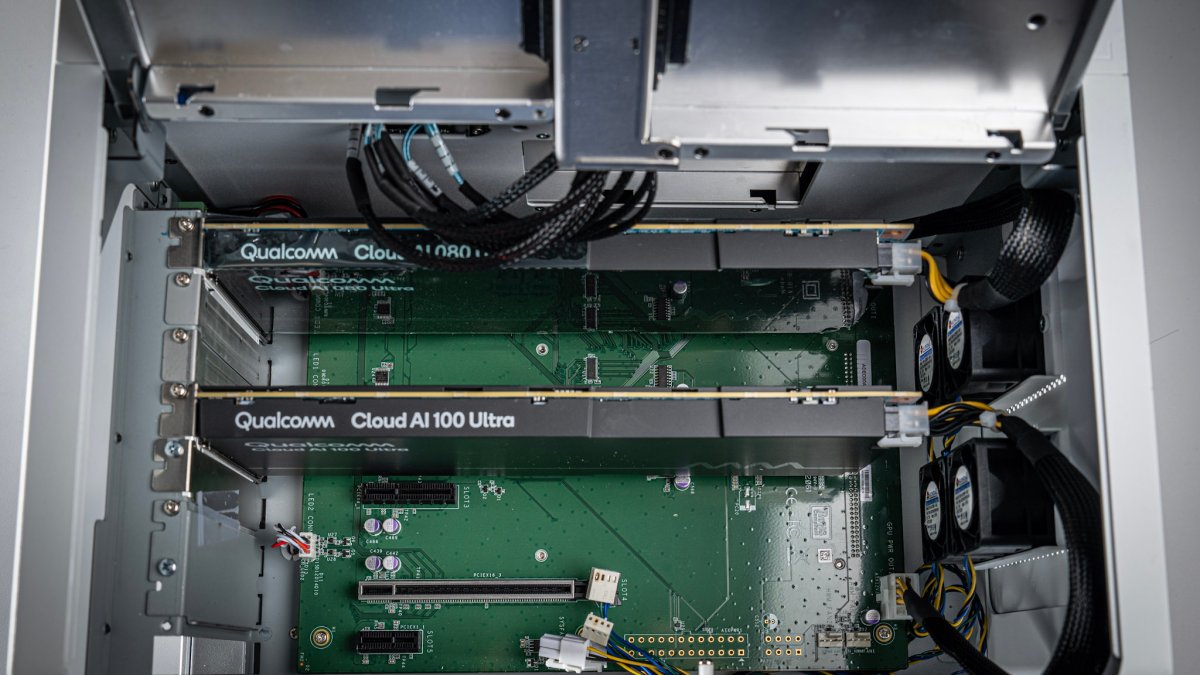
It’s called Dragonwing, a new AI technology developed by Qualcomm. The San Diego-based tech giant has partnered with Trackhouse Racing to enhance their racing operation, giving them a tool NASCAR has never seen before.
“What it really does is enable the team to get real-time performance data through AI without having to have to go to the cloud,” says McGuire. “It’s what we call an on-premise device. So, it’s really where the data is being collected, which is right at the source, and processing it in real time so that the team can take the data and actually look at insights and apply those insights to the performance on the track,” says McGuire.
Through a series of sensors on the car, along with utilizing currently available NASCAR data services, Dragonwing is able to collect massive amounts of information and beam it to the Trackhouse crew chiefs as a race is unfolding. Trackhouse engineers have already come up with ways to evaluate how competing cars are performing that day, including passing prediction models to let a driver know when and where the best time to make a move is and who is getting ready to try and pass themselves.
“Some of the use cases they came up with, we hadn’t even thought of. So, it’s really a delight to see our customers and our partners kind of come up with new ideas on how to use our technology,” says McGuire.
van Ginsbergen will be using it in the San Diego race, and he’ll have a new teammate with him to add to the data gathering mission. Kevin Magnussen, who had a successful 10-year career in Formula 1, will make his NASCAR debut in the number 91 car.
For Qualcomm, the information-gathering processes used in stockcar racing will help inform AI in a slew of other platforms.
“The real-time AI processing is becoming something that’s spreading across multiple devices that are around people’s lives on a day-to-day basis,” says McGuire. “This AI box is just another incarnation of that, but it’s able to process massively more amounts of data than something that, let’s say, you wear on your person like a pair of glasses or a phone. So, when you’re looking at generating data to get analytics for performance on the track, you need that compute power and that performance.”
Fittingly, fine-tuning something without a cloud is happening in a place like San Diego. We don’t have many of those anyways.
For more information on Qualcomm’s Dragonwing technology, click here.

Source link